
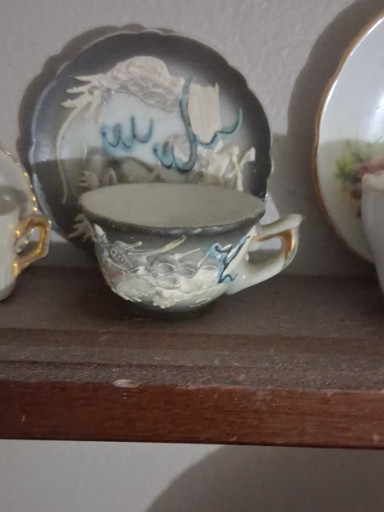
Porcelain moriage dragonware teacup and saucer with raised dragon decoration

History
Moriage dragonware originated in Japan during the late 19th and early 20th centuries, particularly during the Meiji and Taisho periods. This distinctive style features raised slip-trailed decoration, typically depicting dragons, geishas, or landscapes in white relief against a dark background. The technique involves applying layers of liquid clay to create three-dimensional designs before glazing and firing. These pieces were primarily produced for export to Western markets, particularly the United States and Europe, where they became popular as exotic decorative items and functional tea ware. Dragonware remains highly collectible among enthusiasts of Japanese ceramics and vintage tea sets. Collectors appreciate these pieces for their intricate craftsmanship, cultural significance, and nostalgic appeal. The moriage technique requires considerable skill, making each piece a testament to traditional Japanese ceramic artistry. These items are particularly valued by collectors of Asian export porcelain, vintage tea ware enthusiasts, and those who appreciate mid-century decorative arts. The combination of functionality and decorative appeal makes dragonware a favorite among both users and display collectors.
Origin
Japan
Time period
Mid 20th century