
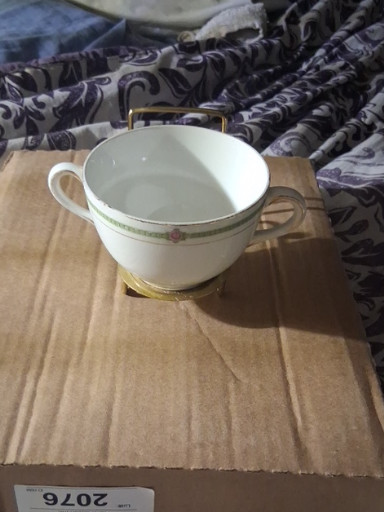
Porcelain teacup from the 'Brisbane' pattern by Nagoya Shokai, Nippon

History
This teacup was produced by Nagoya Shokai, a Japanese porcelain manufacturer that exported fine china during the early 20th century under the 'Nippon' mark. The 'Nippon' designation was used for Japanese porcelain exported to the United States between 1891 and 1921, when U.S. customs regulations required country-of-origin markings. The Brisbane pattern features delicate hand-painted floral decoration with a characteristic green band and gold trim, reflecting the elegant tableware styles popular in Western markets during the Edwardian and early Art Deco periods. Vintage Nippon porcelain appeals to collectors of antique tableware, Japanese export ceramics, and those who appreciate early 20th-century decorative arts. The Brisbane pattern is particularly sought after by enthusiasts of elegant tea service sets and collectors who specialize in Nagoya Shokai productions. These pieces are valued for their fine craftsmanship, historical significance as examples of Japanese export ware, and their delicate hand-painted decoration that represents the high quality of porcelain production during the Nippon era.
Origin
Nagoya, Japan
Maker
Nagoya Shokai
Time period
circa 1891–1921