
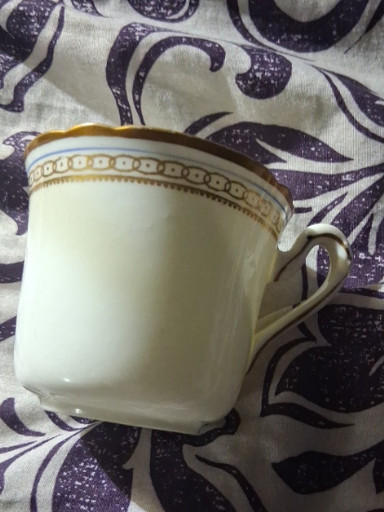
Porcelain teacup with gold trim and decorative banding. Grosvenor China.

History
This style of porcelain teacup with gilt decoration became popular in the late 19th and early 20th centuries, particularly among European and American manufacturers. Fine porcelain tableware with gold embellishments was a hallmark of elegant dining and tea service during the Victorian and Edwardian eras, reflecting both craftsmanship and social status. Such pieces were often produced by renowned porcelain houses in Limoges, Bavaria, and England, where delicate hand-painted or transfer-printed designs were combined with precious metal accents. Teacups like this appeal to collectors of vintage tableware, antique porcelain enthusiasts, and those who appreciate the refined aesthetics of early 20th-century dining culture. The combination of creamy ivory porcelain and gold detailing makes these pieces desirable for display collections, tea parties, or as part of a larger set. Collectors value these items for their historical charm, fine craftsmanship, and the nostalgic connection to a bygone era of formal entertaining. Grosvenor China.
Time period
circa 1900–1930