
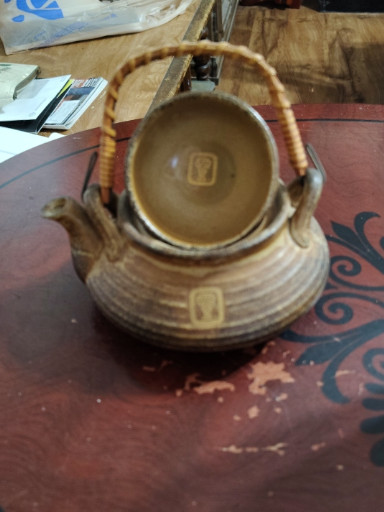
Stoneware teapot with bamboo handle, marked 'Made in Japan'
Selling Price
$30
History
This style of Japanese stoneware teapot emerged during the mid-20th century, reflecting the post-war revival of traditional Japanese pottery techniques combined with modern aesthetic sensibilities. These teapots were often produced in regional kilns throughout Japan, particularly in areas known for their ceramic traditions like Seto, Tokoname, and Shigaraki. The use of natural glazes and bamboo handles became characteristic of Japanese export pottery during the 1960s-1980s. These teapots appeal to collectors of Japanese ceramics, vintage kitchenware enthusiasts, and those interested in mid-century Asian design. The combination of functional pottery with natural materials like bamboo represents the Japanese aesthetic principle of wabi-sabi, celebrating simplicity and natural beauty. Such pieces are valued by tea ceremony practitioners, Asian art collectors, and vintage home decor enthusiasts who appreciate the craftsmanship and cultural authenticity of traditional Japanese pottery.
Origin
Japan
Time period
circa 1960-1980