
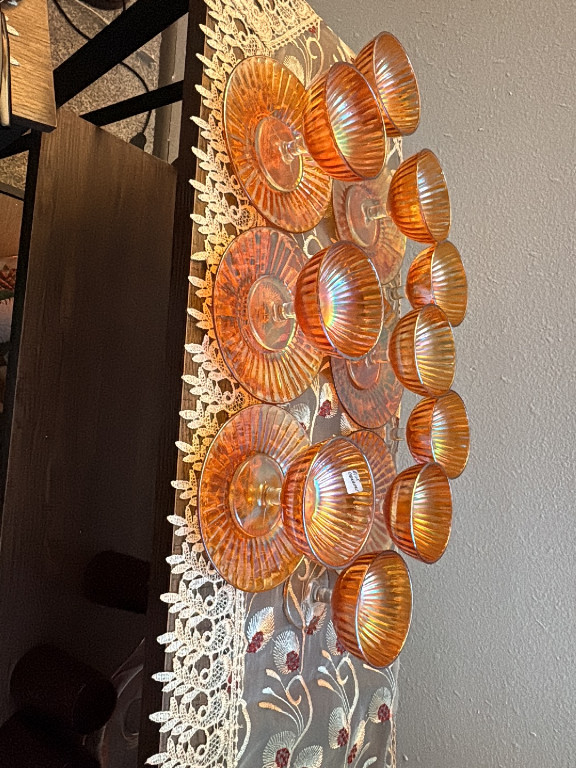
Carnival glass serving set in marigold iridescent finish with ribbed pattern

History
Carnival glass emerged in the early 1900s as an affordable alternative to expensive Tiffany iridescent art glass. American manufacturers like Fenton, Northwood, Imperial, and Jeannette produced these pressed glass pieces with metallic spray treatments that created the distinctive rainbow sheen. The marigold color, achieved through a mixture of iron and sulfur compounds, became the most popular and widely produced shade. These serving sets were commonly given as premiums at carnivals and fairs, which gave the glass its enduring name. Carnival glass remains highly collectible among Depression-era glass enthusiasts and vintage tableware collectors. The appeal lies in its brilliant iridescence, nostalgic connection to early 20th-century American life, and the variety of patterns produced. Collectors particularly value complete sets in excellent condition, as the iridescent finish is delicate and prone to wear. This ribbed pattern in marigold is a classic example that showcases the glass at its most luminous, making it desirable for both display and functional use among vintage glassware enthusiasts and antique dealers specializing in American pressed glass.
Origin
United States
Maker
Jeannette Glass Company or similar American manufacturer
Time period
circa 1920–1940