
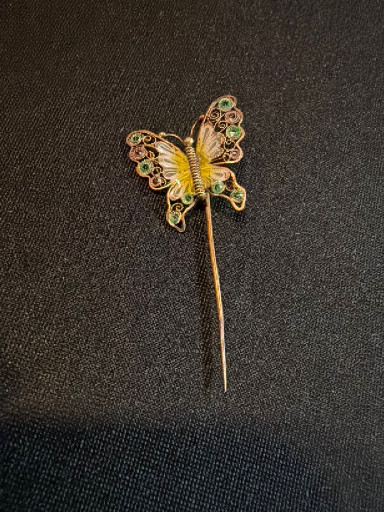
Plique-à-jour enamel and filigree butterfly stick pin

History
Plique-à-jour is a sophisticated enameling technique that creates a stained-glass effect by allowing light to pass through translucent enamel without a metal backing. This technique became popular in the late 19th and early 20th centuries, particularly in Art Nouveau and Art Deco jewelry. Butterfly stick pins featuring this delicate technique were crafted primarily in Europe and Asia during the 1920s through 1950s, serving as elegant accessories for hats, lapels, and scarves. These exquisite pins are highly prized by collectors of vintage and antique jewelry, particularly those who specialize in enamel work and Art Deco accessories. The combination of intricate filigree metalwork and luminous plique-à-jour enamel creates a captivating piece that appeals to enthusiasts of fine craftsmanship and romantic, nature-inspired designs. Such pins are especially valued in the vintage bridal and costume jewelry markets for their delicate beauty and historical significance.
Time period
circa 1920–1950