
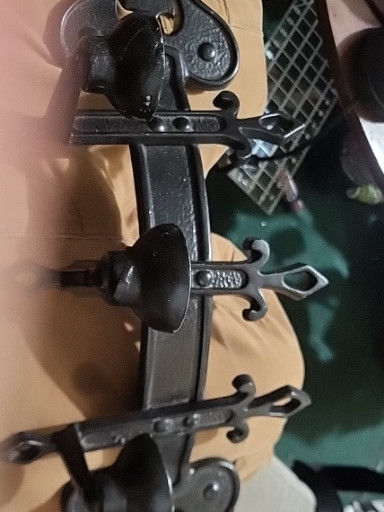
Cast iron Gothic-style wall sconce with fleur-de-lis motifs

History
Gothic Revival wall sconces became popular in the late 19th and early 20th centuries, drawing inspiration from medieval European design elements. These decorative pieces often featured ornate ironwork with religious and heraldic symbols like the fleur-de-lis, crosses, and scrollwork. They were commonly produced in the United States and Europe as part of the Arts and Crafts and Gothic Revival movements that romanticized medieval aesthetics. Such sconces were used in homes, churches, and public buildings to create atmospheric lighting and architectural interest. Gothic Revival metalwork pieces are highly valued by collectors of antique lighting, medieval-inspired décor, and architectural salvage enthusiasts. These items appeal to interior designers seeking authentic period pieces for historic homes, castles, or Gothic-themed spaces. The combination of functional lighting and decorative artistry makes these sconces desirable for both practical use and display, particularly among those who appreciate handcrafted ironwork and historical design movements.
Origin
United States or Europe
Time period
circa 1920-1960