
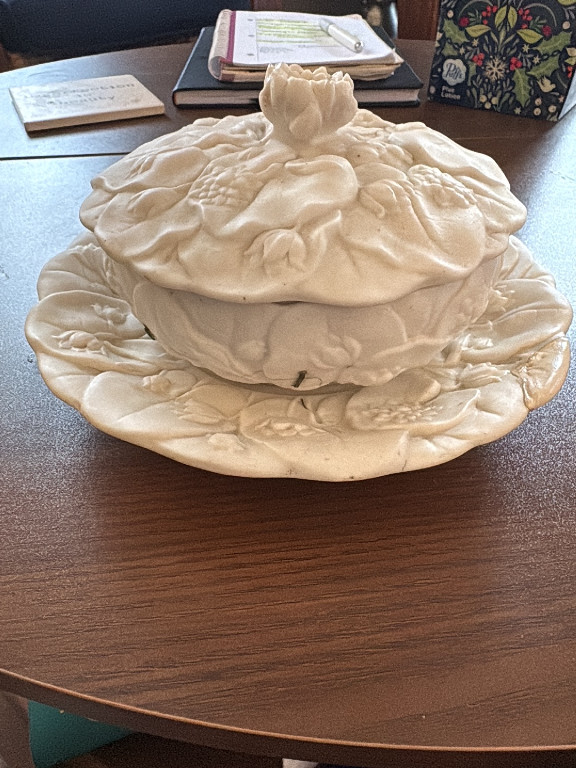
Parian ware covered butter dish with lily pad and floral decoration, attributed to Minton

History
Parian ware emerged in the 1840s as a type of unglazed porcelain designed to resemble white marble, named after the Greek island of Paros famous for its fine marble. English manufacturers like Minton, Copeland, and Wedgwood pioneered this material, creating decorative wares and tableware with intricate molded details. This butter dish exemplifies the Victorian era's fascination with naturalistic designs, featuring water lilies and aquatic plants that were popular motifs in mid-19th century decorative arts. Parian ware butter dishes are highly prized by collectors of Victorian ceramics and English pottery enthusiasts for their delicate craftsmanship and historical significance. The naturalistic lily pad design appeals to those interested in botanical themes and the aesthetic movement of the period. These pieces are particularly valued when attributed to prestigious manufacturers like Minton, as they represent the pinnacle of Victorian ceramic artistry and the era's innovative approach to porcelain production.
Origin
Stoke-on-Trent, Staffordshire, England
Maker
Minton
Time period
circa 1849-1860