
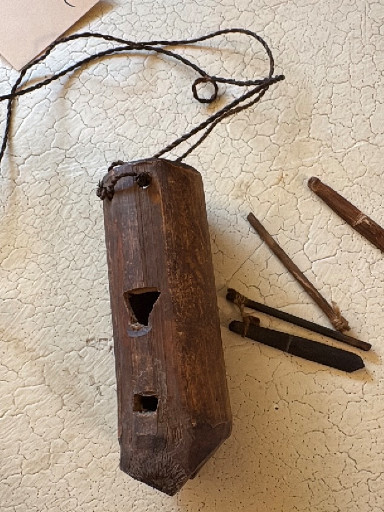
Wooden hanging flower vase (kaki hanaire) or wall-mounted bamboo tool holder

Selling Price
$100
History
This appears to be a traditional Japanese hanging flower vase known as a kaki hanaire, or possibly a utilitarian wall-mounted tool holder. Such objects were crafted from wood or bamboo in Japan and other East Asian cultures from the 18th century onward, often used in tea ceremony settings or as functional household items. The cylindrical form with carved openings allowed for the insertion of flower stems or the storage of small implements like chopsticks or writing brushes. These rustic wooden vessels appeal to collectors of Japanese folk art, tea ceremony enthusiasts, and those interested in minimalist Asian design aesthetics. The hand-carved nature and aged patina make each piece unique, valued for its simplicity, craftsmanship, and connection to traditional Japanese cultural practices. Such items are sought after by interior designers and collectors who appreciate wabi-sabi philosophy and organic, natural materials in home décor.
Origin
Japan
Time period
Late 19th to early 20th century