
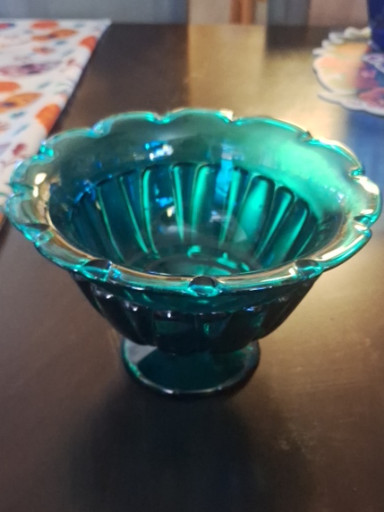
Teal glass footed compote or candy dish

History
This style of teal or ultramarine glass compote emerged during the Depression Glass era of the 1920s-1940s, when American glass manufacturers produced affordable, colorful glassware for everyday use. The vibrant teal color and ribbed interior pattern were characteristic of companies like Jeannette Glass and Anchor Hocking. These footed compotes were versatile pieces used for serving candy, nuts, desserts, or as decorative centerpieces in American homes. The scalloped rim and pedestal base made them elegant yet accessible to middle-class families during economically challenging times. Teal Depression Glass remains highly collectible today among vintage glassware enthusiasts and mid-century decor collectors. The striking color, which can range from blue-green to deep turquoise depending on lighting, makes these pieces particularly desirable for display and use in farmhouse or vintage-inspired kitchens. Collectors appreciate both the historical significance of Depression-era glass production and the aesthetic appeal of these cheerful, colorful pieces that add character to any table setting or shelf display.
Origin
United States
Time period
circa 1930-1950