
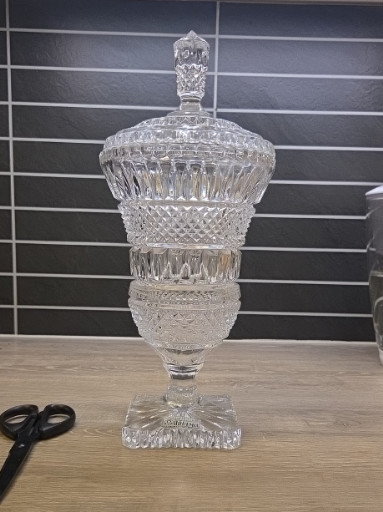
Cut crystal covered compote or sweetmeat jar with diamond point pattern and faceted finial
History
This type of covered compote or sweetmeat jar represents the tradition of fine cut crystal glassware that flourished in Europe and America during the 19th and early 20th centuries. The diamond point cutting pattern, combined with bands of intricate geometric designs and a faceted pedestal base, reflects the skilled craftsmanship of master glass cutters who created decorative pieces for affluent households. These vessels were typically used to serve candies, nuts, or preserved fruits at formal gatherings, and the lidded design helped protect the contents while adding an elegant centerpiece to dining tables. Such pieces are highly valued by collectors of vintage glassware, crystal enthusiasts, and those who appreciate decorative arts from the Victorian and Edwardian eras. The intricate hand-cut patterns, the substantial weight of quality crystal, and the timeless elegance of the form make these compotes desirable for both display and functional use. Collectors prize examples with clear, brilliant glass, sharp cutting, and intact lids, as these pieces represent the pinnacle of traditional glassmaking artistry and add sophistication to any collection of fine tableware or decorative objects.
Time period
Late 19th to Early 20th century