
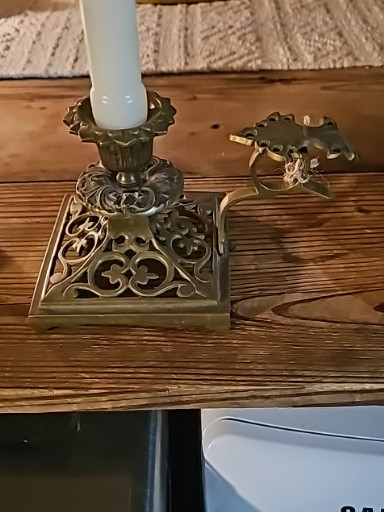
Brass chamberstick candleholder with ornate pierced base and finger loop

History
Chamberstick candleholders emerged in the 17th century as practical lighting devices designed to be carried from room to room. The wide drip pan protected the user's hand from hot wax, while the finger loop or handle allowed safe transport. This style with ornate pierced metalwork became particularly popular during the Victorian era and continued into the early 20th century, often featuring elaborate scrollwork and decorative patterns that reflected the period's love of ornamentation. These candleholders appeal to collectors of antique lighting, brass enthusiasts, and those interested in Victorian-era decorative arts. The intricate pierced work and functional design make them desirable both as historical artifacts and as decorative accent pieces. Collectors particularly value chambersticks for their craftsmanship and the glimpse they provide into daily life before electric lighting, when such portable light sources were essential household items.
Time period
Late 19th to early 20th century