
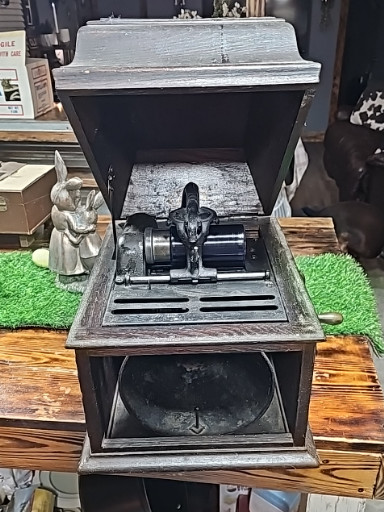
Edison Amberola 30 cylinder phonograph

History
The Edison Amberola 30 was introduced by Thomas Edison's company in 1915 as part of the Amberola line of cylinder phonographs. These machines represented the final evolution of Edison's cylinder technology, featuring internal horn designs that produced superior sound quality compared to earlier external horn models. The Amberola 30 was designed as a mid-range model with an oak cabinet and could play both two-minute and four-minute cylinder records. Despite their technological sophistication, cylinder phonographs were soon overtaken by disc record players in the marketplace, making the Amberola line one of the last gasps of cylinder technology. These phonographs are highly valued by collectors of early sound reproduction technology and Edison memorabilia. The Amberola 30 appeals to antique technology enthusiasts, music historians, and collectors who appreciate the craftsmanship and innovation of early 20th-century audio equipment. These machines represent a pivotal moment in entertainment history when recorded music first entered American homes, and they are prized for their historical significance, mechanical ingenuity, and the nostalgic connection they provide to the dawn of the recording industry.
Origin
Orange, New Jersey, United States
Maker
Thomas A. Edison, Inc.
Time period
circa 1915-1929