
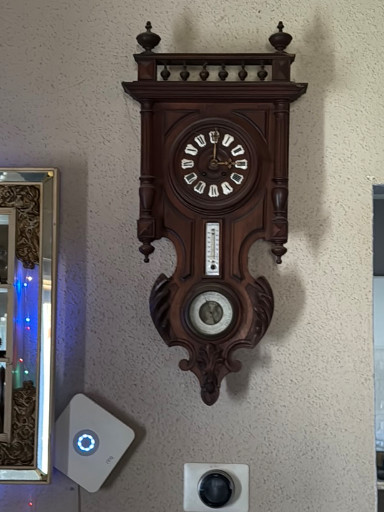
Walnut wall clock with barometer and thermometer

Selling Price
$500
History
This type of wall clock originated in Europe during the late 19th century, combining timekeeping with weather instruments in a single decorative piece. These multi-functional clocks were particularly popular in France and Germany, where they served both practical and ornamental purposes in middle-class homes, schools, and public institutions. The integration of a barometer and thermometer alongside the clock mechanism reflected the Victorian era's fascination with scientific instruments and precision, making them ideal educational tools in schoolhouses where students could learn about time, weather, and atmospheric pressure. Such clocks are highly valued by collectors of horological instruments, antique home décor enthusiasts, and those interested in educational antiques. They appeal to collectors who appreciate the craftsmanship of traditional clockmaking and the elegant fusion of form and function. The walnut case with its carved details and architectural elements makes it particularly attractive to collectors of Victorian and Edwardian furniture, decorative arts, and vintage schoolhouse memorabilia. The provenance of schoolhouse use adds historical significance and educational value, making it especially desirable to collectors of academic and institutional antiques.
Origin
France or Germany
Time period
circa 1880-1920