
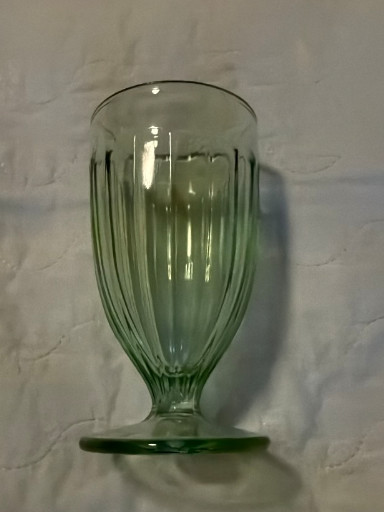
Green depression glass footed tumbler with vertical ribbing

History
Depression glass was mass-produced in the United States during the 1920s through 1940s, primarily by companies like Anchor Hocking, Hazel-Atlas, and Federal Glass. This affordable glassware was often given away as promotional items or sold at five-and-dime stores, making it accessible to families during the Great Depression. The green color, achieved through uranium oxide or other metal oxides, was among the most popular hues produced. Depression glass remains highly collectible among vintage glassware enthusiasts and antique collectors who appreciate its historical significance and nostalgic charm. Collectors often seek complete sets or specific patterns, and the pieces serve as affordable entry points into antique collecting while offering attractive display options. The distinctive green color and Art Deco-influenced ribbed designs appeal to those interested in early 20th-century American decorative arts and social history.
Origin
United States
Time period
circa 1930-1950