
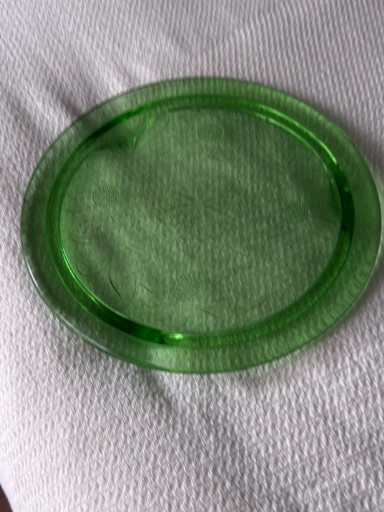
Green Depression glass oval platter, likely Federal Glass or Hazel Atlas, circa 1930s

History
Depression glass was mass-produced in the United States during the 1920s through 1940s, primarily by companies like Federal Glass, Hazel Atlas, and Anchor Hocking. This green variant, often called uranium glass or vaseline glass, contains small amounts of uranium oxide which gives it its distinctive color and causes it to glow under ultraviolet light. These pieces were given away as premiums or sold inexpensively during the Great Depression era, making glassware accessible to average households during difficult economic times. Depression glass has become highly collectible among vintage glassware enthusiasts and antique collectors who appreciate both its historical significance and aesthetic appeal. The uranium glass variants are particularly sought after by collectors who specialize in glowing glass, as they represent an interesting intersection of industrial history, decorative arts, and scientific curiosity. These pieces are valued for their nostalgic connection to American history and their distinctive color that ranges from pale yellow-green to deep emerald.
Origin
United States
Maker
Federal Glass Company or Hazel Atlas Glass Company
Time period
circa 1930-1940