
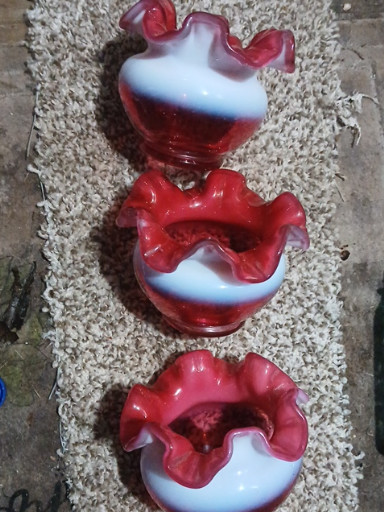
Set of three cranberry opalescent glass bowls with ruffled crimped edges

Selling Price
$125
History
Cranberry opalescent glass became highly popular in the late 19th and early 20th centuries, particularly in American glassmaking centers like West Virginia. The distinctive cranberry color was achieved by adding gold chloride to the glass mixture, while the opalescent effect was created through a reheating process that caused milky white edges to form. Companies like Fenton Art Glass became renowned for producing such pieces, with their crimped and ruffled designs becoming signature styles that continued through the mid-20th century. These decorative bowls appeal to collectors of American art glass, particularly those who specialize in Fenton or cranberry opalescent pieces. The vibrant color, elegant ruffled edges, and nostalgic charm make them desirable for display in vintage-inspired interiors or as part of broader glass collections. Collectors value these pieces for their craftsmanship, historical significance in American glassmaking, and the warm aesthetic they bring to any setting.
Origin
West Virginia, United States
Maker
Likely Fenton Art Glass Company
Time period
Mid 20th century