
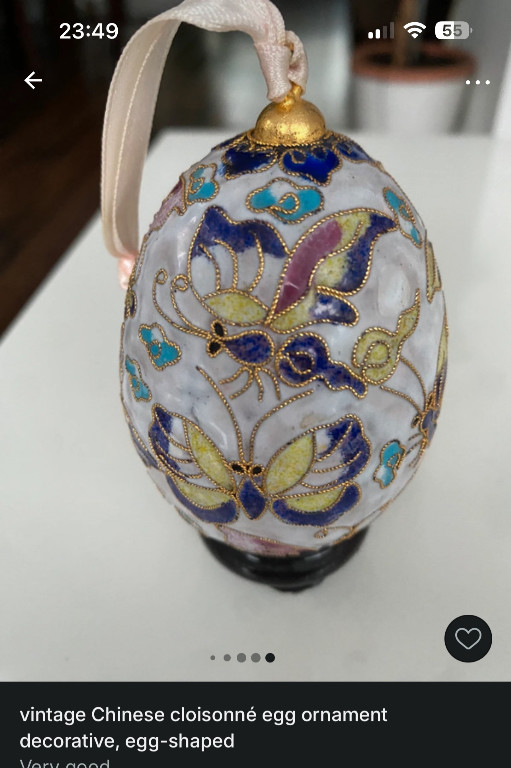
Chinese cloisonné enamel egg ornament with butterfly and floral motifs

History
Chinese cloisonné enamel eggs became popular decorative items in the late 19th and early 20th centuries, reflecting traditional Chinese metalworking techniques. The cloisonné process involves applying colored enamel within wire compartments on a metal base, then firing and polishing to create intricate designs. Butterfly motifs symbolize joy, beauty, and transformation in Chinese culture, making these ornaments particularly meaningful. These decorative eggs appeal to collectors of Asian art, cloisonné enthusiasts, and those interested in traditional Chinese craftsmanship. The combination of delicate enamelwork, symbolic imagery, and functional beauty as both ornament and display piece makes them highly valued in the decorative arts market. Collectors appreciate the skilled handwork required to create the intricate wire patterns and the vibrant enamel colors that characterize quality cloisonné pieces.
Origin
China
Time period
Late 20th century